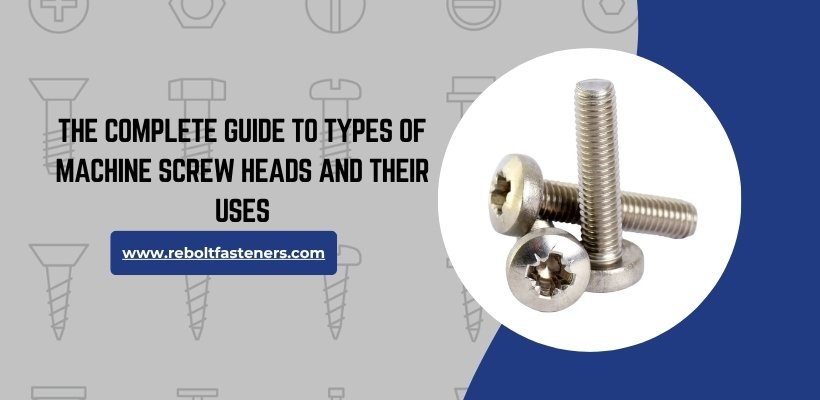
Understanding Machine Screw Head Designs for Better Fastening Decisions
The Head of a Machine Screw is a critical component in the performance, speed of construction, and aesthetic of a product. But it’s more than cosmetic reasons: the head type can influence the screw strength, load distribution, and how easy it is to install.The Complete Guide to Types of Machine Screw Heads and Their Uses As an engineer working in manufacturing, as a mechanic, or just a DIYer, you can easily be able to accomplish credible and expert results by knowing the distinctions.
In electronics assembly, as well as in heavy-duty metal applications, the right screw head guarantees the right amount of torque is used, the material is not damaged, and it will have a long life. In this manual, we will discuss the most typical machine screw heads, their features, and the areas where they must be applied more effectively.
Common Machine Screw Head Types and Their Applications
The following chart lists the machine screw head types and points out popular designs and practical applications:
| Head Type | Profile | Key Characteristic | Typical Application |
| Pan Head | Slightly rounded | Wide bearing surface | Electronics, panels |
| Flat Head | Countersunk | Flush finish | Wood, metal surfaces |
| Oval Head | Raised countersunk | Decorative finish | Furniture, visible surfaces |
| Truss Head | Low-profile wide | Large surface area | Sheet metal, plastics |
| Hex Head | External hex | High torque capability | Machinery, construction |
| Socket Head | Cylindrical | Internal hex drive | Precision assemblies |
This table serves as a quick reference for selecting the right machine screw head types for metal, plastic, or wood applications.
Comparing Flush vs Protruding Machine Screw Heads
Types of Flush heads (Countersunk)
Flush heads like flat and oval screws are fashioned to be flat with the surface. They are perfect in:
- Furniture or panel finishes that are smooth.
- Such applications where protrusions cannot be accepted.
- Aerodynamic/ aesthetic need.
Flat head types are very popular with machine screw heads that need a clean surface, such as wood and metal.
Protruding Head Types
Fastener heads like pan, truss, and hex sit on the surface and provide:
- Better load distribution
- Less difficult installation and removal
- Higher torque handling
They are usually applied to machine screw head types for electronics and industrial assemblies.
Machine Screw Head Types for Different Materials
Machine Screw Head Types for Metal
In the case of metals, the essential ones are the strength and torque. Common choices include:
- Fastening hex head screws are used in heavy-duty applications.
- Socket head screws of precision and high-strength joints.
They are used in machinery and have strong clamping forces.
Machine Screw Head Types for Plastic
Plastic is delicate to handle so that it does not break:
- The load is evenly distributed by truss head screws.
- Surface damage is prevented by pan heads.
They are perfect in enclosures, casings, and lightweight assemblies.
Machine Screw Head Types for Wood
Wood users are advantaged by:
- Flat flush finish heads.
- Oval shapes to use as decorations.
These guarantee functionality and attractiveness.
Machine Screw Head Types for 3D Printing
In 3D-printed components:
- Pan and truss heads are used in preference to distribute loads.
- Socket heads are designed when the alignment is needed to be precise.
They minimize the stress concentration in printed components.
Popular Machine Screw Head Types Explained
What is a Pan Head Screw?
A pan head screw has a flat bearing surface that has a slightly rounded top. It finds a wide application in electronics and sheet metal as it has good holding power without causing any damage to the surface.
What is a Flat Head Screw?
Flat head screws are countersunk, i.e., they are in the plane with the material. They are usually applied in situations that are in need of a smooth finish, including in woodworking or metal panels.
What is a Truss Head Screw?
The profile of truss head screws is wider and lower than that of pan heads. They are perfect fasteners for soft materials such as plastic since they have a big surface area and do not harm them.
Choosing the Right Machine Screw Head Type
The right screw head depends on several factors:
- Load requirements
- Finish (flush or raised) desired.
- Installation tools available
Knowing these parameters will help you to choose the most appropriate type of machine screw heads and applications in your project.
Conclusion
Selecting the many types of machine screw heads is crucial to attain high strength, high stability, and aesthetic assemblage. A flush finish is either needed to give it a more beautiful appearance or a bulging head, which is required to be stronger; however, each has its purpose. Finding the appropriate screw head type to match the material and use will guarantee maximum performance, longevity, and simplicity of installation.
FAQs
Q1. What types of machine screw heads are there?
Pan, flat, oval, truss, hex, and socket are the most common types of machine screw heads. All of these have their own unique application and advantages, depending on the material and design.
Q2. A pan head screw is used for
A pan head is rounded with a flat base. This is great for electrical appliances, panels, and assemblies when you need to have a wider bearing area to improve the clamping force.
Q3. When to use flat head screws
These are used to be countersunk. The screw is suitable for wood and metal using applications where a flush surface is required.
Looking for the right machine screw head? Check out our range of quality machine screws. Contact us or email us at sales@reboltfasteners.com for advice and to find the best machine screw for your job.